
The Essentials of Healthcare Cybersecurity – What you need to be aware off?
In the healthcare system if there’s something that is actively changing according to the demands- is cybersecurity; All of the healthcare providers imminently require first-rate security as it is essential to the whole healthcare setup in this evolving market environment. The perfect cybersecurity vendor is aware of all the data breaches/threats that are present for a system and has a know-how with all the up-to-date cybersecurity methods. A few factors that make a healthcare system vulnerable are:
Outdated software with little to no encryption;
it is like an open invitation to the hackers, not only is the system vulnerable to data-breaches but it can also face certain threats of essential data loss. That lost data can be misused effecting Medical Practices and Healthcare systems negatively, the problem can be dire and result in loss of valuable patients.
Malware Network and Viruses;
Many times, certain types of viruses are spread maliciously into the systems in the form of files and links or connections made over a network; these can infect the files and reduce the performance of the data. It is of great importance that a safe healthcare system must have anti-virus software or plans being followed to prevent such malware networks and viruses.
Data phishing;
This is a harmful phenomenon that is usually done by the means of a disguised email, if you click on the link that assumingly seems trustworthy, it can put the data at risk by giving access to the hackers - thus putting the confidential data of the patients at risk.
To protect confidential data, it is crucial to contact and partner with a secure/cautious Medical Billing company that understands the security parameters and the threats associated.
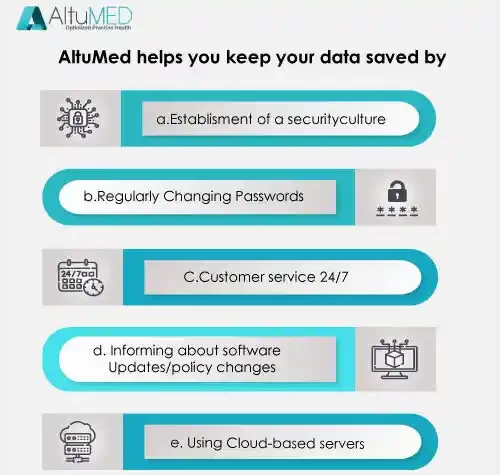
Data can significantly be kept safe by imposing a few practices such as the:
Establishment of a security culture;
This ensures that all the workers are aware of the data safety measures and only a few selective people are given the authorization to access designated software.
Passwords should be changed often;
The training should be provided to the workers so that they are aware of what practices to perform when the data is at significant risk and how to avoid clicking upon dangerous links.
Medical Billers/Medical Billing Companies should be asked to provide Customer service 24/7 for the workers to have a know-how of the latest software updates and their system requirements and can ask for help whenever needed
In modern times many large-scale companies are opting for cloud-based servers as it is a secure system/domain where there is only authorized access granted. It prevents data loss and system crashes whilst providing on-the-go access to important data. It should be ensured that the cloud system is being regularly updated and heavily encrypted to provide unlimited security.
AltuMED is HIPAA compliant medical billing company, we ensure that all information is encrypted and secure. Contact us to learn more about our safety parameters
Subscribe to Our Newsletter!
Subscribe to Our Newsletter!
Enter Your Email Address. We Promise We Won't Spam You