Logo of AltuMED featuring a stylized letter A and the tagline Smarter, Healthier Revenue in blue and gray text.
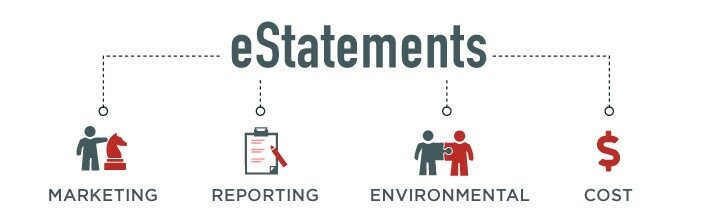
Illustration of 6 Reasons Medical Practices Should Use e-Statements to Streamline Their Medical Billing Process

Patient Statements: Generation Process and Features

Medical bills come in specific formats that healthcare practices and insurance payers can understand pretty well. But what about patients? They are the ultimate payers. So it’s their right to know about medical procedures and their costs. But the opacity of medical bills can make it difficult for them to understand these details.

This is where patient statements come into play. These concise medical invoices use an easy-to-understand language to help patients understand the charges of medical services they have received. As a result, they can make appropriate decisions about their health care.

In this article, we are going to briefly discuss how patient statements are generated and what they contain. We will also discuss important steps to improve the statement generation process. So let’s get started.

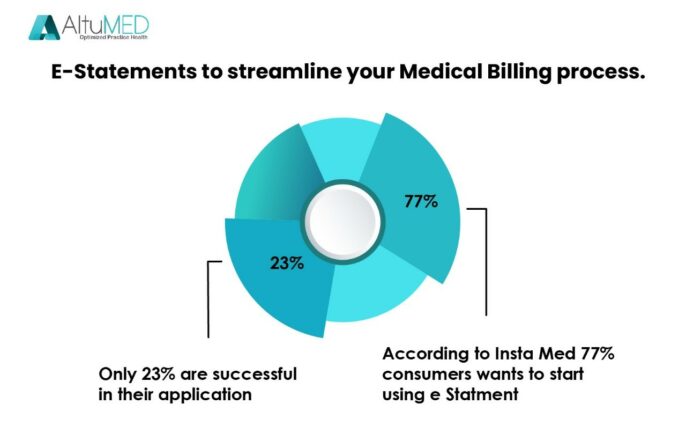
A pie chart representing how e-statements can ctreamline medical billing process

A Brief Explanation Of How Patient Statements Are Generated

Patient statements are the documents sent to the patients to explain rendered medical services and their charges. These documents are prepared by the practitioner or the billing team after the service provision.

The main purpose of these statements is to inform patients about their financial responsibility. They also contain details of the insurance amount. Sure, these statements look straightforward with no complex medical jargon. But their generation involves an immaculate process with multiple steps.

Here is an overview of the patient statement generation workflow:

1.Gathering complete patient details and determining their financial responsibility

2.Creating a superbill, which contains the details of:

  1. Itemized charges
  2. Payment options
  3. Explanation of benefits (EOB)

3.Generating the statement and sending it through mail or electronically

4.Collecting payment and updating patient accounts

Patient statements benefit both the patients and healthcare practices. Patients get to know about the medical services they received and their costs. This allows them to know whether or not they are being overcharged. At the same time, these invoices help practitioners gain their patients’ trust.

These statements also help patients have a clear view of their insurance. They can ensure that their insurance company has paid the right amount according to the plan.

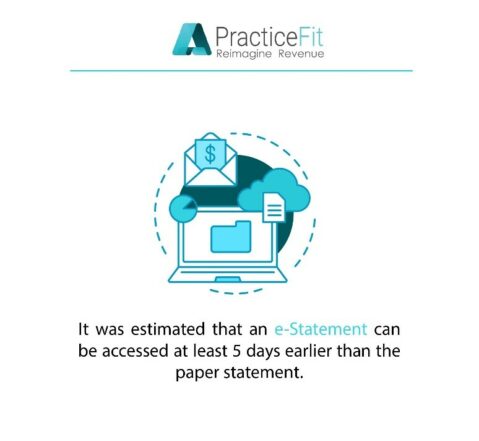
An image showing how AltuMED can assess e-statements earlier than the paper statement

Important Features Of A Patient Statement

Every healthcare facility uses its own approach to prepare patient statements. Therefore, the criteria for this process are subjective to some extent. Even so, some components of these statements are standard. Those include the following:

Patient Information

It is the most fundamental part of any patient statement. It consists of the patient's name, phone number, address, and other identity-confirming details.

Insurance Details

This section contains information about the patient's insurance, including the policy number. The insurance details include copayments, co-insurance, deductibles, and other adjustments. One of the main purposes of this information is to let the patients know about the part of the bill they must pay.

Rendered Services

Needless to say, you will need to let your patients know about the services you have provided them. A patient statement is the most appropriate documentation for this purpose. The relevant details include the date of service, the name of the provider, and the services themselves.

Charges

In this section, you list individual fees against the services rendered and then write down the sum of all charges. It also includes the details of the payments covered by insurance. It is the most important part of a patient statement. Therefore, its accuracy is imperative.

Payment Information

In this part of the statement, you name every payment method you accept. This information is vital for ensuring timely payment from the patient. To make things even easier, you can briefly overview the steps involved in every payment method.

Streamlining Patient Statement Generation

Optimizing patient statements can help you ensure timely payments from your patients. Below are the steps to effectively run this optimization process:

  • Make them clear and simple: You do not know whether your patients can understand medical jargon. The best way is to assume they are just laymen. Therefore, use clear and simple language that is easily understandable. Explain things in headings and bullet points to make all important details prominent.
  • Give a detailed and accurate account of charges: Breaking down treatment charges is essential for transparency. So, explain charges of every service rendered during the course of treatment. To help your patients understand this fee breakdown, list down services and their charges in a chronological order.
  • Provide multiple payment options: Be sure to add more than one payment option to the statement. And ensure that these options are easy to use for patients. Top options include automated phone payments, online payments, and payment by mail. Also, explain payment steps with each option.
  • Send the statement on time: You want your patients to pay their bills immediately. But this will happen only when you send them the statement in a timely manner. Ideally, you should send patient statements within 5 days after claim adjudication.
  • Personalize the statements for better engagement: The first thing in this step is to address your patients by their names. Then, give them a complete but simplified account of all the services and their charges. Use a consistent and engaging tone throughout the statement’s writing.

Common Patient Statement Formats

Paper had been the traditional format for patient statements for years. But now, it has been almost completely replaced by e-statements. Practices now issue statements and send them via email. Not only is this option eco-friendlier, but it also helps accelerate payments.

Taking a step further, many healthcare practices are using online portals to show automated patient statements. They create separate accounts for patients to log in and view their statements online. This option is more in line with HIPAA as it offers better protection of patients’ health information. Many portals also provide online payment options to make fee submission more convenient.

Conclusion

Patient statements are an essential way to keep your patients informed about their medical expenses. These statements also prompt the patients to make timely payments. Hence, a significant part of your RCM depends on these documents.

Therefore, it is essential to optimize how patient statements are generated. You should have complete knowledge of the features and steps involved in the creation of these statements.

If you are finding it hard to streamline patient statement generation in-house, you can outsource it to AltuMED. We are a complete practice management company with years of experience. Our highly skilled team of billers and revenue personnel manages every aspect of your practice, including patient statements. For details, call us today.

Subscribe to Our Newsletter!

SUBSCRIBE

Subscribe to Our Newsletter!

Enter Your Email Address. We Promise We Won't Spam You

Relevant Articles

Categories

Follow Us

Subscribe to newsletter

Enter your email to receive our newsletter, so you can stay in the loop with our latest promos.